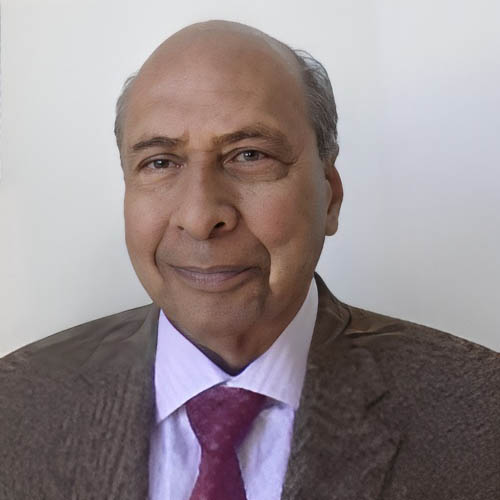
A village inheritance
Dr. Mutalik was raised in an orthodox rural family in Karnataka, in a household where two sciences were never seen as opposites. His father was an Ayurvedic physician, a Sanskrit scholar, a student of Vedanta, and the village's informal counselor and philosopher — the person people came to for both a diagnosis and for perspective. From an early age, his father inducted all his children into the disciplined study of Sanskrit, Yoga, and Vedanta, not as religious ritual but as a rigorous inner science, practiced with the same seriousness as any clinical training.
That dual foundation — traditional Indian systems of knowledge sitting alongside a hunger for modern scientific method — would define the next seven decades of his life.
Building a career in Indian medicine
Dr. Mutalik studied at Fergusson College before earning his MBBS in 1952, followed by postgraduate training in Internal Medicine in 1955, both at B.J. Medical College (BJMC), Pune. He rose quickly: by around 1959–60 he had become the first Professor and Head of the Department of Medicine at BJMC, later serving as Dean.
He didn't just occupy the role — he built institutions around it. He helped establish the Research Society at BJMC and Sassoon Hospital to foster a genuine culture of inquiry among clinicians, a society that today counts hundreds of members. He founded BJMC's first Department of Human Genetics and Counselling Centre, pioneering research into genetic abnormalities, including studies among tribal populations, and went on to co-found the Indian Society of Human Genetics and its academic journal.
As Maharashtra's Director of Medical Education and Research (DMER), he shaped health services and medical education policy across the state. Over the course of his teaching career, he taught more than 6,000 medical students and authored or co-authored over 100 research articles spanning medical genetics, global health, and integrative medicine.
On the world stage
Dr. Mutalik's career then moved outward. He held senior Director roles at the World Health Organization across three continents, and headed the WHO office at United Nations headquarters in New York, before retiring from WHO around 1990.
Retirement didn't slow him down. From 1992 to 1998, he served as Chief Executive Officer of International Physicians for the Prevention of Nuclear War (IPPNW) — the organization awarded the Nobel Peace Prize in 1985 — focusing on peace, nuclear disarmament, and international development. He also held affiliations with Johns Hopkins University School of Medicine, and has been based in the United States since around 1985, in Massachusetts and Florida.
Building the bridge: integrative medicine
Where most physicians specialize, Dr. Mutalik spent the second half of his career doing the opposite — building bridges between systems that rarely speak to each other. He became one of the leading voices arguing that modern biomedical science and traditional systems like Ayurveda and Yoga are not rivals, but complements — an approach he and his collaborators have described as evidence-based integration, systems biology applied to lifestyle medicine, and personalized care.
The books
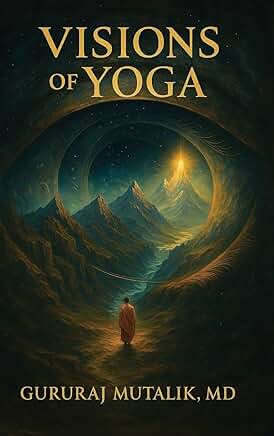
Visions of Yoga
An allegorical journey through the Eight Limbs of Yoga, written for readers new to the practice and lifelong practitioners alike. Drawing on Sanskrit scholarship, Vedanta, and seven decades of clinical experience, the book explores the inner discipline — from effort to awareness, control to surrender — that Dr. Mutalik holds responsible for his own healthy longevity. Launched at Savitribai Phule Pune University in November 2024.
Find it on Amazon →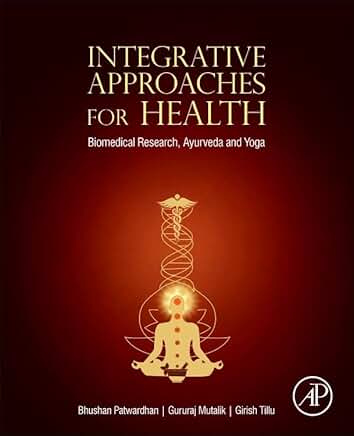
Integrative Approaches for Health
A scholarly case for a paradigm shift in modern medicine — co-authored with Prof. Bhushan Patwardhan and Dr. Girish Tillu. The book argues that biomedical research, Ayurveda, and Yoga must be studied together, not separately, to meet challenges that biomedicine alone hasn't solved: chronic disease, resistant infection, and the global burden of noncommunicable illness. The three authors, spanning three generations of scientific training, bring complementary expertise to the case.
View on Elsevier →The daily practice
At 97, Dr. Mutalik maintains a biological age of roughly 70 — a claim he doesn't attribute to luck, but to genetics combined with four decades of disciplined routine. His father lived to 96, his mother to 91. He credits the rest to what he actually does, every day:
Breakfast is light — typically oatmeal with spices. He avoids excess carbohydrates and practices periodic fasting. His routine has been adjusted over the years to meet real challenges, not idealized ones: at 90, he survived a cardiac arrest caused by 90% coronary blockage, and has since managed his weight and blood sugar with the same discipline he once brought to running a hospital department.
He is candid that discipline, in his own life, has never worked as a rule imposed on others — only as an example lived out personally. And he returns often to one idea above all: a clear sense of purpose is the most effective defense against the stress that, in his clinical view, is the single greatest driver of premature ageing.
"There are several factors that can hasten premature ageing. Among them, stress is one of the greatest contributors — and hence it is necessary to develop a sense of purpose in life."
Advocacy
Dr. Mutalik has argued publicly that ageing itself should be classified as a disease — not to pathologize growing older, but to unlock the research funding that classification would attract, in service of what he calls, simply, healthy ageing as a global public health goal.
Awards and recognition
- Suryadatta Lifetime Achievement Award (2012) for excellence in Health & Medicine
- Fellow of the National Academy of Medical Sciences (India)
- Professor Emeritus, B.J. Medical College and Sassoon Hospital, Pune
- Frequent honoree and invited speaker in India and the United States, including the Dr. B.B. Dikshit Oration
Today
Dr. Mutalik currently serves as Executive Director and Principal Content Editor of the Jijnyasa Education and Research Foundation's "Ancient Indian Wisdom" project, and as Chairman of the Research Committee at the Janaseva Foundation in Pune. He continues to publish — recent papers address breaking down the silos between healthcare systems, and the emerging field his collaborators call "AyurYoga."
His grandchildren call him Ajoba. It is, in its own way, the only title that captures what this website exists to share: not just a physician's record, but a grandfather's accumulated answer to how to live well, for a very long time.
Learn the practice, not just the story
Free foundational videos, and a complete member library of Dr. Mutalik's daily protocols.
Watch free videos